
SAFE SCHOOL UNIFORMS
Why we are demanding safe school uniforms for children across the UK
Over 10 million children have gone back to school in the UK – most of them wearing plastic clothing.
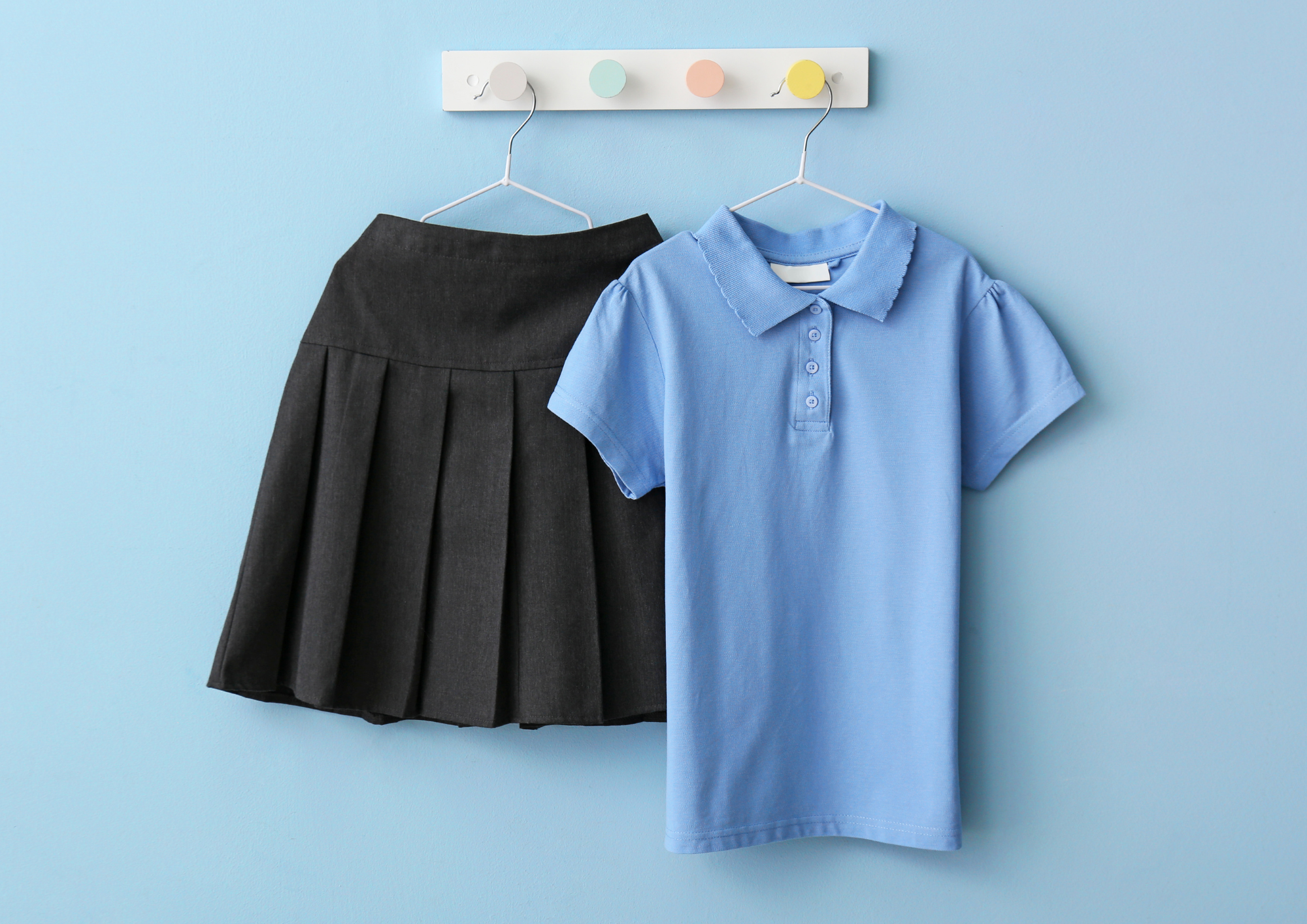
UK school uniforms have more in common with fast fashion than you might think. Many are made from polyester – a plastic-based fibre that sheds microplastics – and can contain multiple hazardous chemicals.
Studies increasingly show the long-term health harms caused by microplastic inhalation and chemicals from clothing. Children are particularly at risk, over years of daily exposure.
Children spend thousands of hours wearing these clothes, often directly against their skin, while growing scientific evidence links exposure to microplastics and hazardous chemicals with potential health impacts.
With the potential risks to children's long-term health, we must act now to reduce exposure and ensure school uniforms are safe.
If schools are going to make children wear uniforms – the UK Government should make sure they are safe.
What’s the Problem with school uniforms?
Chemicals used in clothing production
The clothing industry often treats fabrics with chemicals like phthalates, formaldehyde, PFAS (known as “forever chemicals”), and flame retardants. Chemicals are used throughout clothing production in dyes, treatments and finishes, including to make fabrics stain-, water- or wrinkle-resistant.
“These are chemicals we have known for decades are harmful; that may cause cancer, infertility, or developmental problems in children”, according to Pelle Moos, chemical expert and policy officer at consumer group BEUC.
A recent study of children’s clothing found a range of chemicals of concern, with the highest number and concentrations detected in garments made from 100% polyester, where most of the chemical content remained even after 10 washes.
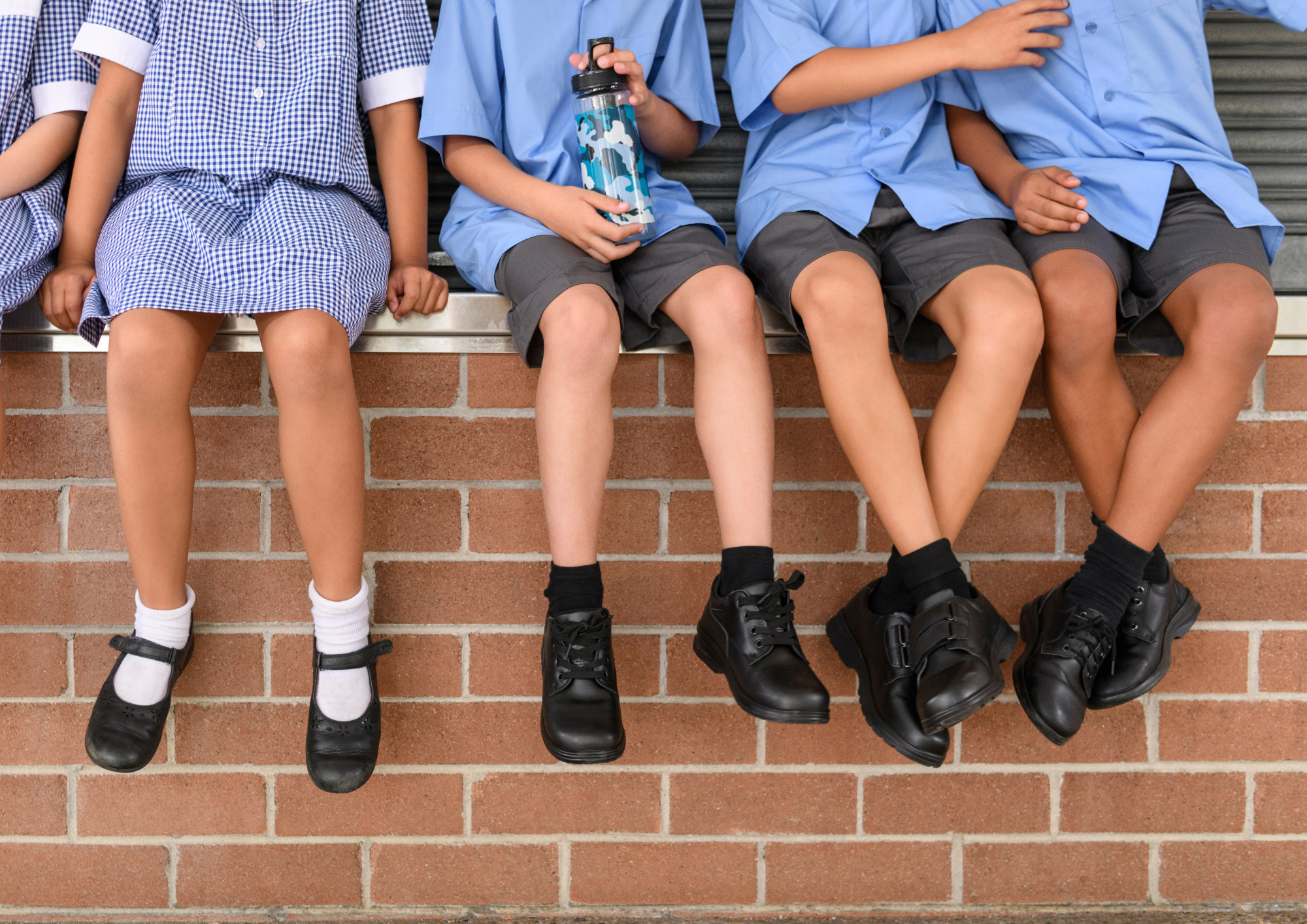
Clothing labelling in the UK doesn’t have to tell us what chemicals are used in school uniforms, and at what levels they are allowed to be used – so parents have no way of knowing if they are safe for children’s daily wear.
In the EU, even supermarkets like Lidl and Aldi use the OEKO-Tex Standard 100 – a label that shows that the clothing has been tested to be free from harmful levels of hazardous chemicals (tests which are stricter for babies and children). Why can’t this happen here in the UK?
Parents should not have to guess what chemicals are in clothes their children are required to wear every day.
Microplastics from polyester fabric are a growing health risk
UK school uniforms are now mostly made from synthetic fabrics like polyester. Polyester is made from PET plastic – the same used for plastic bottles – which comes from fossil fuels. Polyester releases microplastic fibres when worn and washed.
This means children are breathing in and ingesting microplastics that shed from their daily clothing. Children are particularly vulnerable to microplastics because their bodies are still developing and they can be exposed to more microplastics, relative to their body weight, than adults. There’s evidence that children under six inhale up to three times more microplastics than adults.

Microplastics can reach deep into all parts of the human body, including the brain. Growing evidence links microplastic exposure to inflammation and raises concerns about potential longer-term impacts on children’s health.
(Notably, recycled polyester is no better, and it may even be worse: microplastic particles from recycled polyester are much smaller and more easily absorbed by the body than those from regular polyester, and it sheds up to 55% more than virgin polyester.)
Scientists are raising the alarm. Parents should be concerned about what daily exposure to microplastics could mean for children’s growing bodies and developing brains:
It’s long been suspected from studies in animals that microplastics exposure can cause respiratory infections and diseases like asthma, and even heart disease and cancer.
Microplastics act as carriers of endocrine-disrupting chemicals, interfering with hormonal systems and potentially disrupting children’s physiological development.
Scientists are also linking microplastics exposure to neurodegenerative diseases – one alarming finding from a review of multiple studies was the 3–5 times higher concentration of micro and nanoplastics in the brains of individuals diagnosed with dementia, compared to those without.
Why does polyester get a pass?
The fashion industry is hooked on plastic. Synthetic fibres already make up 69% of textiles, projected to rise to 73% by 2030.
The low cost of polyester fuels fast fashion’s production of cheap clothing – creating more waste, more microplastic pollution and growing concerns for our health.
As climate action threatens their profits, the fossil fuel industry has found a new place to sell their petrochemical products: the fashion industry.
In fact, the textiles sector is the third-largest consumer of plastics globally, providing a lifeline for the fossil fuel industry just as other sectors are moving away from fossil fuels.
Consumers have started to tackle plastic use elsewhere. But the rising use of polyester shows how the fossil fuel industry is using fashion to keep us dependent on petrochemicals.
People need to know the truth – and children must be urgently protected from the harmful effects of clothing made from fossil fuels.
What’s the solution?
Strong UK Government regulation on chemicals and polyester in school uniforms
The UK Government must urgently enforce a full ban on hazardous chemicals in children’s clothing.
The UK Government must urgently get started on regulating plastics in clothing, particularly for childrenswear. In the EU for example, new rules could require clothing brands to tell us when clothes contain plastic, design them to shed fewer microplastics, and ensure products that shed too much plastic cannot be sold.
Parents should have strong reassurance from the government that school uniforms are safe for children, through strong mandates for retailers on improving labelling.
We’ll be writing an Open Letter to the UK Government by the end of 2026 with our demands.
Easier parent access to lower-impact and secondhand school uniforms
Parents should not have to spend more to have access to safe school uniforms.
Parents need reliable easy access to secondhand uniforms, as a first choice.
Secondhand school uniforms that have been worn and washed many times are likely much safer for children, keeping clothing that has already shed its chemicals and microplastics in useful circulation.
We’re building a network of parents, schools and secondhand champions like charity shops to make safer school uniforms easily accessible and more affordable than buying new.